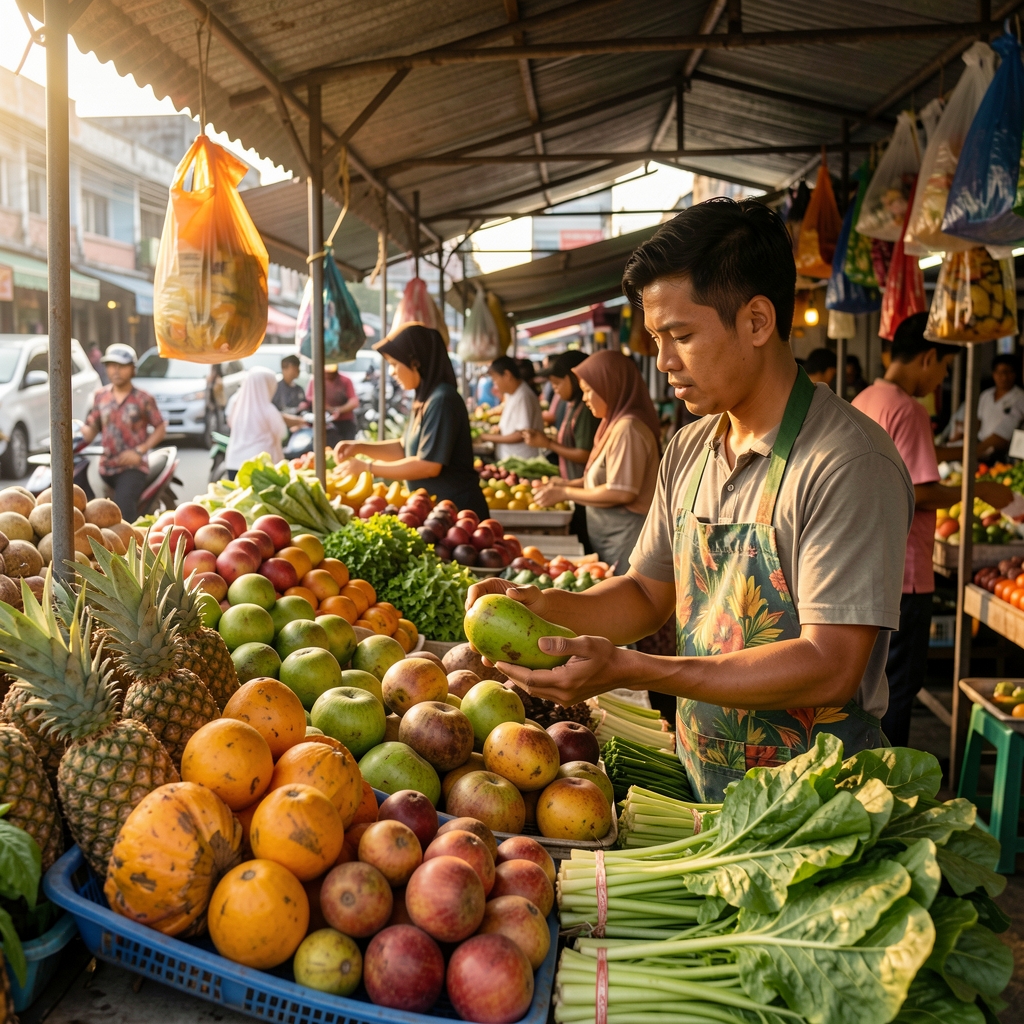
Variety
Rotate colours, textures, and sources of protein where practical. Variety can make meals more interesting while broadening the nutrients on the table.
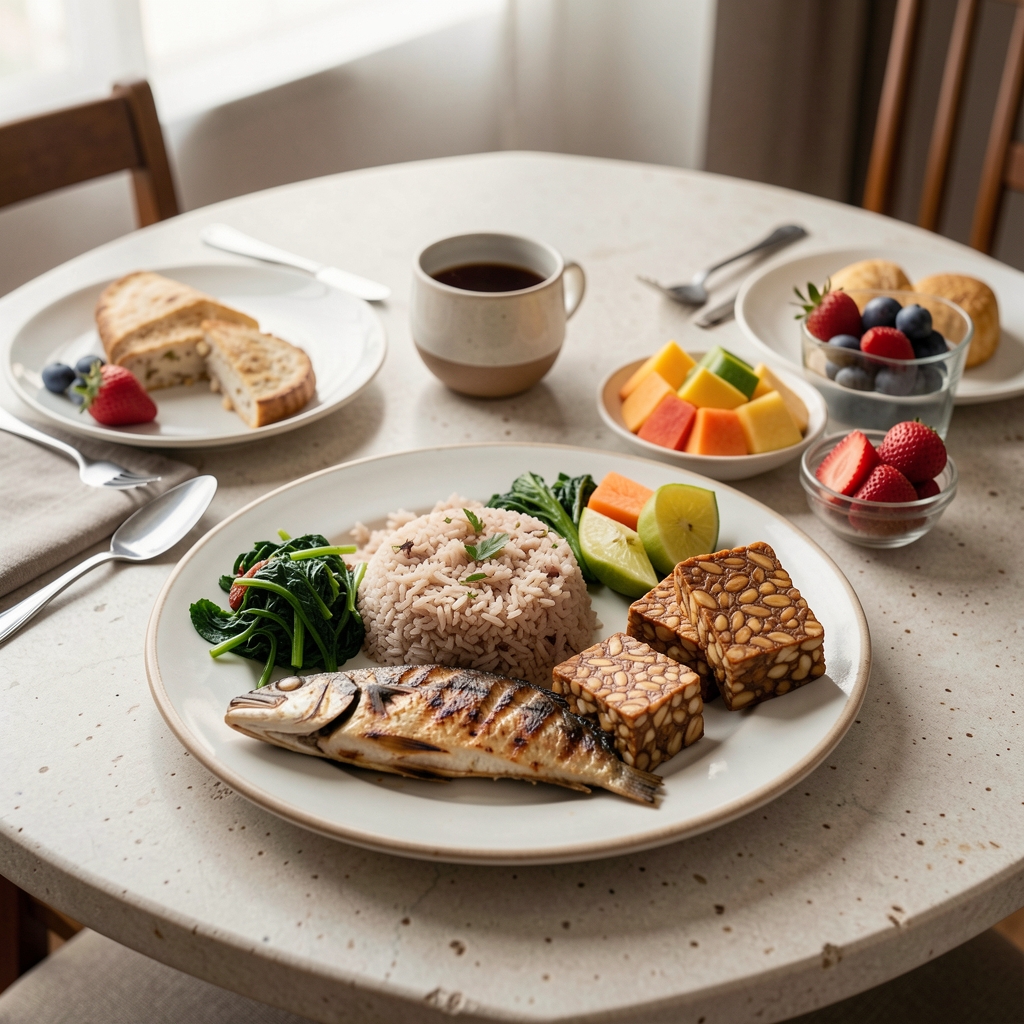
Nutrition after 30 does not need to become a contest of restriction. A useful approach looks at satisfaction, variety, affordability, culture, and the energy required to prepare a meal.
In Indonesia, familiar foods such as rice, tempeh, tofu, fish, greens, fruit, and legumes can be part of many patterns. The meaningful question is how the whole week looks, not whether one meal performs perfectly.
Rotate colours, textures, and sources of protein where practical. Variety can make meals more interesting while broadening the nutrients on the table.
Vegetables, fruit, legumes, and whole grains contribute texture and support a satisfying meal. Increase changes gradually and pay attention to comfort.
Work, heat, exercise, and illness can change fluid needs. Water is a useful default, while thirst and medical advice remain important context.
Regular meals can reduce the feeling that every decision is urgent. A simple breakfast or prepared lunch may help on demanding days.
| Approach | Strength | Question to ask |
|---|---|---|
| Home cooking | Control over ingredients and portions | Can the preparation be shared or simplified? |
| Eating out | Convenience and social connection | What familiar combination feels satisfying? |
| Meal planning | Less decision fatigue | How much structure remains realistic? |
A meal carries memory, hospitality, religion, and place. Advice that ignores those dimensions may be technically tidy but difficult to live with. Keep the parts that support connection and adapt the parts that create unnecessary friction.
Read food culture notes