Light
Daylight earlier in the day and lower, warmer light at night can help create a clear distinction between active and quiet hours.
Sleep is shaped by biology and circumstance. A busy city, late messages, warm nights, shared rooms, and changing responsibilities can all influence the way rest feels.
Instead of chasing a perfect number, begin by observing timing, light, caffeine, meals, movement, and the transition between work and bed.
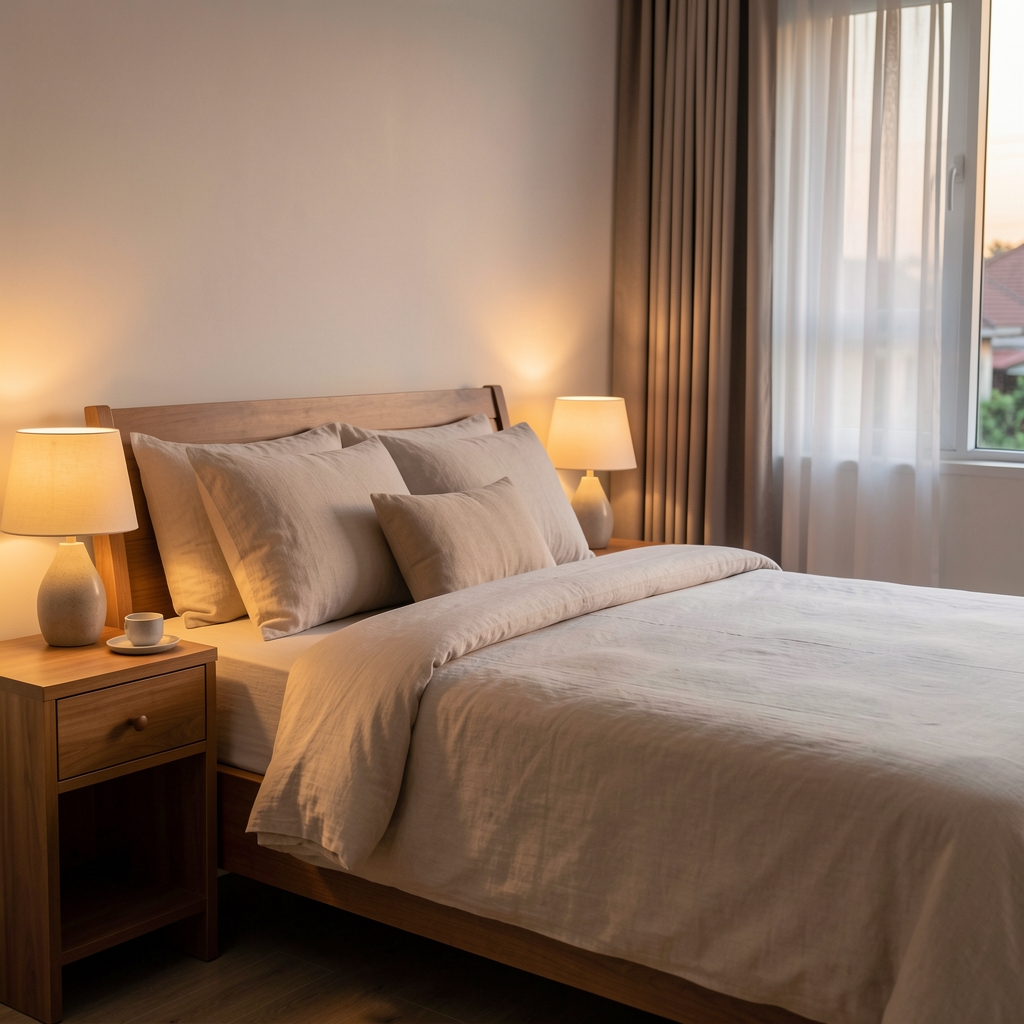
Daylight earlier in the day and lower, warmer light at night can help create a clear distinction between active and quiet hours.
A repeatable sequence such as washing, reading, and preparing tomorrow can reduce the abruptness of stopping work.
Noise, temperature, caregiving, and health conditions deserve practical attention rather than blame.
| Note | Example | Why it helps |
|---|---|---|
| Bed and wake time | Approximate local time | Shows rhythm without false precision |
| Evening stimulants | Coffee, tea, screens, work | Highlights patterns to discuss or adjust |
| Daytime experience | Focus, mood, sleepiness | Connects night observations to daily life |
Persistent loud snoring, pauses in breathing, severe daytime sleepiness, or distressing changes deserve professional assessment rather than a self-directed challenge.

There will be nights that do not follow a plan. A supportive routine leaves room for illness, travel, celebrations, and care. The aim is a kinder pattern, not a perfect record.
Prepare for a health conversation